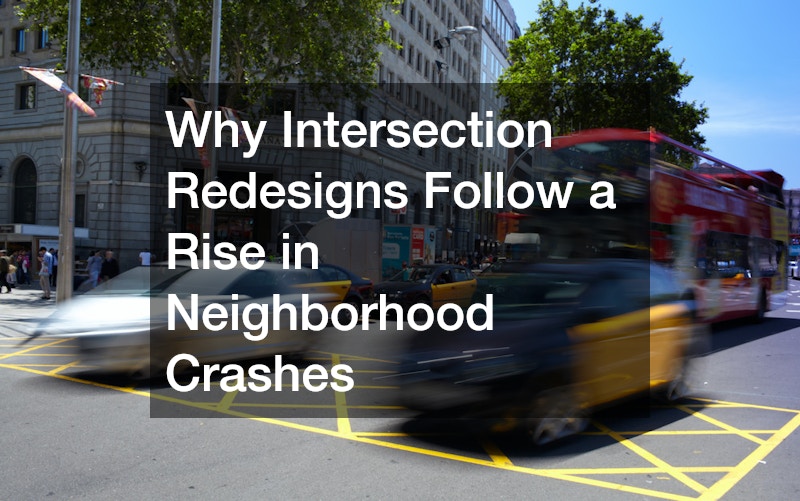
If you have noticed new turn lanes, flashing beacons, or reworked signals popping up at a once-familiar intersection near your home, you are not imagining a random construction project. Cities typically redesign intersections in direct response to documented spikes in crashes, injuries, and near-misses reported by residents. Understanding why these changes happen, and what data drives them, can help you navigate your neighborhood more safely while you wait for improvements. It can also help you recognize when a dangerous intersection may have played a role in a crash you or a loved one experienced.
How Crash Data Triggers Engineering Review
Local transportation departments do not redesign intersections on a whim. Most cities track crash reports through police records and feed them into a centralized database, often the same system used for statewide crash reporting, then flag locations once they exceed a certain threshold of collisions within a rolling period, commonly three to five years. That threshold might be as specific as eight crashes in three years or a set number of injury crashes in a single year, depending on the jurisdiction’s adopted policy. When an intersection crosses that threshold, it typically triggers a formal traffic engineering study. Engineers pull crash reports to examine patterns: whether collisions are rear-end, angle, or left-turn crashes, how many involved injuries versus property damage only, and whether they cluster at certain times of day or under specific weather conditions. That review often extends beyond the crash log itself. Analysts may compare the intersection’s crash rate against similar intersections citywide, request traffic volume counts, and sometimes conduct field observations to see how drivers actually behave versus how the intersection was designed to function. The goal is to distinguish a true engineering or design deficiency from a cluster of unrelated, driver-error incidents that redesign wouldn’t necessarily prevent.
These studies also weigh factors beyond raw numbers, including whether crashes cluster around specific movements like left turns, right-turns-on-red, or pedestrian crossings. A cluster of rear-end collisions on one approach might point to a signal timing problem, while a pattern of angle crashes at the same corner often signals poor sightlines or a confusing turn lane. Engineers look for these patterns because they suggest a fixable design flaw rather than random driver error. To separate the two, analysts often break crashes down by time of day, weather, and driver age, checking whether the same conditions keep producing the same type of collision. Three or more similar crashes within a year at one location is a common threshold that prompts closer scrutiny. If crashes are scattered across different movements and conditions, the intersection may simply reflect normal traffic risk rather than a design issue. This distinction matters because it determines whether the fix involves a new signal phase, a redesigned curb or turn radius, added street lighting, or simply better signage. A misdiagnosed problem can mean spending on infrastructure that doesn’t address the actual cause, leaving the crash pattern unchanged. That’s why engineers typically cross-reference crash reports with site visits and traffic counts before recommending a specific redesign.
- Rear-end collisions often point to timing issues with signals, such as yellow intervals that are too short for approach speeds or poorly coordinated signal progression between adjacent intersections
- Left-turn crashes frequently suggest a need for protected turn phases, especially at intersections with high traffic volume, limited sightlines, or speed limits above 35 mph
- Pedestrian injuries can prompt shorter crossing distances, curb extensions, or refuge islands, particularly at intersections near schools, transit stops, or senior housing
- Repeated side-impact or “T-bone” crashes may indicate poor sightlines, overgrown landscaping, or confusing right-of-way rules at uncontrolled or four-way stop intersections
- Crash clusters occurring during specific hours (like school dismissal or evening rush) can point engineers toward time-based fixes, such as adjusted signal timing rather than physical redesigns
- Multiple crash types at one location often signal that a single fix won’t suffice, pushing engineers toward a broader redesign involving geometry, signage, and signal changes together
Common Warning Signs Neighbors Notice First
Long before official data catches up, residents usually sense that an intersection has become more dangerous. Frequent near-misses, drivers running red lights, and confusing lane markings are often reported informally to city council members or neighborhood associations before any crash statistics are compiled. These grassroots complaints can actually accelerate the review process when enough residents speak up.
Increased traffic volume from new housing developments, schools, or commercial buildings is another common early indicator. As more vehicles and pedestrians compete for the same space, the original intersection design may no longer match how people actually use it. Recognizing these signs early can help residents advocate for changes before a serious injury occurs.
- Sudden increase in near-miss reports on community social media pages
- New developments adding significant traffic without infrastructure updates
- Complaints about poor visibility due to overgrown landscaping or parked cars
- Confusion over right-of-way at unmarked or poorly marked crossings
What a Typical Redesign Actually Changes
Intersection redesigns vary widely depending on the specific problems identified, but most fall into a few recognizable categories. Some projects focus purely on signal timing, giving pedestrians a head start or extending yellow light duration to reduce red-light running. Others involve physical changes like roundabouts, raised crosswalks, or narrowed lanes designed to slow traffic naturally.
Larger redesigns sometimes restructure the entire intersection geometry, converting a four-way stop into a signalized junction or adding dedicated turn lanes to separate conflicting movements. These bigger projects tend to follow the most severe crash patterns, particularly those involving serious injuries or fatalities. Cities generally prioritize funding for locations where data shows the clearest safety benefit per dollar spent.
- Signal retiming and pedestrian head-start intervals
- Roundabouts or traffic circles to reduce high-speed collisions
- Protected left-turn arrows and dedicated turn lanes
- Raised crosswalks and curb extensions to slow vehicles
Timeline From Complaint to Construction
Residents are often surprised at how long the process takes between identifying a dangerous intersection and seeing actual construction crews on site. A typical timeline includes data collection, engineering studies, public comment periods, and budget approval, which can stretch the process across one to three years even for straightforward fixes. More complex redesigns involving property acquisition or major utility work can take considerably longer.
Funding is frequently the biggest bottleneck rather than engineering complexity. Many cities rely on state or federal safety grants that require competitive applications, and intersections must often demonstrate a clear crash history to qualify. This is one reason documented crash reports matter so much, since they form the evidentiary backbone of funding requests. Those same reports, often compiled with help from a car accident attorney representing injured residents, can also give city officials the detailed documentation needed to justify prioritizing one intersection over another.
What to Do If You Are Involved in a Crash There

If you are injured at an intersection that later gets flagged for redesign, documenting the scene thoroughly can matter well beyond your immediate medical needs. Photos of skid marks, signal timing, sightline obstructions, and road markings can become valuable evidence if the intersection’s design contributed to the crash. Many people do not realize that a poorly designed intersection can factor into a legal claim, not just driver error.
Speaking with a personal injury attorney soon after a crash can help clarify whether design flaws, delayed maintenance, or municipal negligence played a role in what happened. An experienced injury lawyer can also help you understand how comparative fault works when multiple factors, including road design, contribute to a collision. Because claims involving government entities often have shorter filing deadlines than typical personal injury cases, getting guidance quickly is especially important.
- Take photos of the intersection, signals, and any obstructions immediately after a crash
- Request the police report and note any mention of prior complaints or crash history
- Save any local news coverage or city council discussion of the intersection
- Check with the city clerk’s office to see if similar collisions have been reported at the same location
Intersection redesigns rarely happen overnight, but they almost always follow a documented rise in crashes, injuries, or persistent community concern. Understanding this process can help you advocate for safer streets in your own neighborhood and recognize warning signs before a serious collision occurs. If you or someone you know has already been hurt at a problematic intersection, gathering evidence early and speaking with a qualified professional can protect both your health and your legal options moving forward.