Most people discover what their community actually offers only when something goes wrong. A job loss, a medical emergency, a child struggling in school — that’s when the frantic searching begins. The frustrating part is that most of the resources needed in those moments existed all along, often underfunded not because of lack of demand but because of lack of awareness. Understanding what’s available before a crisis develops isn’t just smart planning. It changes the quality of help you receive, because you’re accessing resources from a position of choice rather than desperation.
Libraries as Connective Tissue, Not Just Book Repositories
The public library is one of the most systematically underused institutions in American civic life. Most residents think of it as a place to borrow books or let children browse. In practice, many library systems serve as informal social service hubs — hosting job search workshops, notary services, 3D printing access, seed lending programs, tax preparation assistance through IRS-certified volunteers, and meeting spaces for community groups.
The real gap isn’t awareness that libraries exist; it’s awareness of their programming depth. A resident who needs resume help might pay $150 to a career coach without knowing their library branch offers the same assistance weekly at no cost. Libraries in many metro areas also maintain curated databases — legal reference tools, genealogy records, academic journals — that would otherwise require paid subscriptions.
What most people miss is that library program offerings are heavily shaped by usage numbers. Underpopulated programs get cut. Attending a free workshop even once helps justify its continued existence for residents who need it more urgently. Check the library’s digital calendar at least quarterly and sign up for email program alerts — most systems allow this at no cost and surface new programming as it’s added.
Community Health and Developmental Resources You Should Map Before You Need Them
Local health departments, community health centers, and school-linked support programs form a network that most families only encounter reactively. School districts, for example, are federally required to provide evaluations for children who may have developmental or learning differences — but parents who don’t know this often pay out of pocket for private assessments first. The same principle applies to early intervention programs for children under three, which are state-administered and typically free.
For families navigating a child’s developmental concerns, knowing how the public evaluation pipeline works matters enormously. A pediatrician recommending autism testing through the school district’s special education office, for instance, follows a different timeline and cost structure than pursuing it privately — understanding that distinction before the conversation happens puts parents in a far stronger position.
Community health centers — federally qualified health centers, specifically — operate on a sliding-fee scale tied to household income. A family earning $45,000 annually with no insurance might pay as little as $20 per visit at a qualified center, compared to $150 or more at an urgent care clinic. Most people within a few miles of one have never looked up where it is. Locate the nearest federally qualified health center through HRSA’s public directory and confirm its hours before you need a same-week appointment.
Beyond clinical care, local health departments often run programs that go entirely unnoticed: lead paint testing for rental units, free immunization clinics, maternal support visits, and mental health first aid training for community members. These aren’t advertised aggressively because public health budgets are thin, not because the services are unavailable.
Mutual Aid, Nonprofit Networks, and the Gap Between Perception and Reality
There’s a widespread assumption that community assistance programs are for people in severe poverty and no one else. That perception keeps working- and middle-class families from accessing resources during temporary hardship — a medical leave, a layoff, an unexpected home repair — that could prevent a manageable problem from becoming a financial crisis.
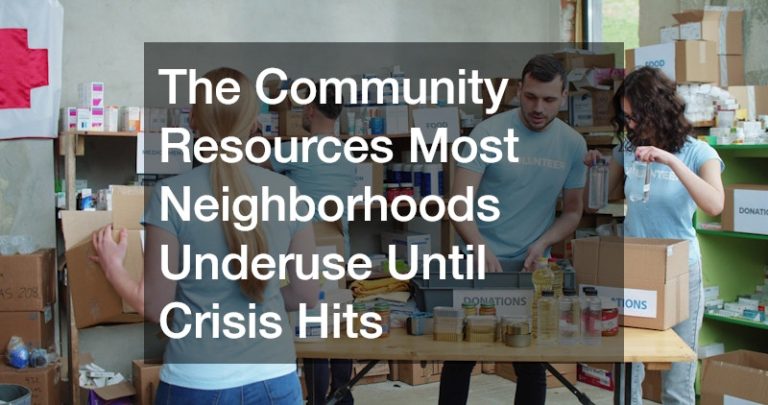
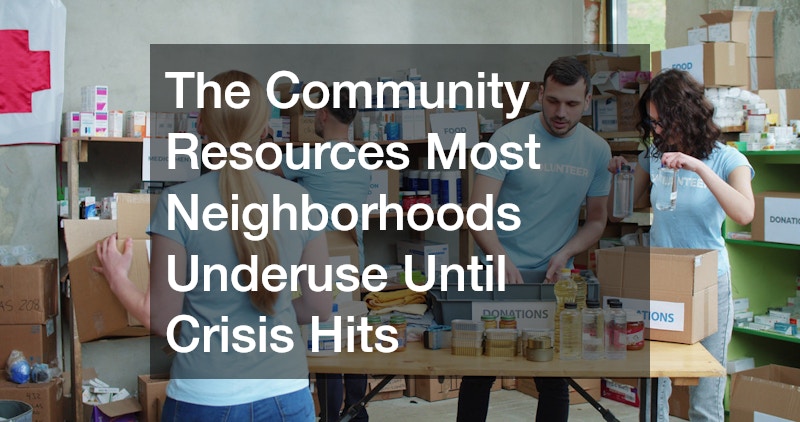
Food pantries, for example, have substantially expanded their eligibility models since 2020. Many now operate as “client choice” pantries, where visitors select items like grocery shopping rather than receiving a prepackaged box. Eligibility thresholds are often set at 185% to 200% of the federal poverty level, which in 2024 covers a family of four earning up to roughly $55,000 annually. Emergency rental assistance programs, utility aid through the Low Income Home Energy Assistance Program (LIHEAP), and local community action agencies follow similar structures.
The comparison worth making here is reactive versus proactive engagement with these networks:
- Reactive: a household waits until they’ve missed two utility payments, faces shutoff, and calls in a panic — at which point processing times may mean the help arrives too late.
- Proactive: the same household identifies their local community action agency contact and LIHEAP application window in advance, so they can submit at the earliest sign of difficulty.
Most community action agencies host an intake coordinator whose sole function is to connect residents to layered services — combining food, utility, and rental assistance in a single intake process. Calling before a crisis, even just to understand eligibility and process, takes about 20 minutes and changes the entire outcome.
Workforce and Legal Aid Resources That Quietly Serve Thousands
State workforce development agencies, often called American Job Centers, provide services that residents routinely pay for elsewhere. Resume review, skills assessments, career counseling, subsidized training programs, and connections to apprenticeship opportunities are available to any adult, not just unemployment claimants. Many centers have dedicated staff for veterans, people with disabilities, and workers over 50.
Legal aid societies operate on a similar model for civil legal matters — housing disputes, family law questions, benefits denials, consumer protection issues. Eligibility is income-based, but the threshold is higher than many people assume, often reaching 200% to 250% of the federal poverty line. A resident earning $35,000 who has been wrongfully denied a benefit, threatened with illegal eviction, or involved in a custody matter may qualify for free attorney consultation or representation.
Three things that make the difference in actually using these resources:
- Contact your state’s American Job Center at least 30 days before a job loss becomes critical — severance periods and notice windows are the right time to schedule an intake appointment.
- Request an itemized list of services from legal aid before assuming your issue doesn’t qualify; denial rates are higher for people who self-screen out without asking.
- Use 211.org (dial 2-1-1) as a starting point for any local service category — it aggregates real-time availability across most counties and is updated more frequently than government websites.
Start Mapping Now, Not When the Emergency Arrives
The barrier to using community resources isn’t usually eligibility — it’s familiarity. People who’ve never walked into a community health center or called a legal aid line don’t reach for those options under stress; they reach for what’s familiar, which is often more expensive and less effective. Spending two hours now — locating your nearest federally qualified health center, noting your library’s program calendar, and saving the 2-1-1 number — creates a practical map that changes how a future hard moment unfolds. The resources exist. The gap is almost always awareness, not availability.