A thriving residential community is about more than attractive homes and well-maintained shared spaces. Residents also want to feel comfortable, connected, and confident that their neighborhood has systems in place to support their everyday experience. As communities grow, managing access to shared spaces, coordinating visitors, and maintaining convenient entry procedures can become increasingly important.
Technology can help community associations and property managers address these needs while creating an experience that appeals to current and prospective residents. Modern access management tools can make it easier to control who enters a property, provide convenient options for authorized visitors, and maintain useful records.
Gated community access control software can contribute to these goals by helping communities organize entry procedures through digital tools. When implemented effectively, these systems can support convenience, improve the resident experience, and contribute to the long-term growth of a community.
Creating a More Convenient Entry Experience
Residents expect everyday tasks to be convenient, and entering their neighborhood is no exception. Traditional access methods may require physical keys, cards, remotes, or manually operated gates. While these approaches can work, they may become difficult to manage as communities expand.
Digital access management can provide additional options for authorized residents and visitors. Depending on the system, residents may be able to use mobile credentials, codes, or other approved methods to access the community.
Convenient entry can improve the day-to-day experience for residents while reducing some of the administrative work associated with managing access credentials.
Supporting a Positive First Impression
The entrance to a residential community can shape a visitor’s first impression. A gate system that is difficult to navigate or frequently causes delays may create frustration for residents, guests, and prospective homebuyers.
A well-organized access system can contribute to a smoother arrival experience. Visitors can follow clearly established procedures, while residents can use approved methods to enter the property.
For prospective residents touring a community, a modern and well-managed entrance may also communicate that the neighborhood values convenience and organization. While access technology alone will not determine whether someone chooses to move into a community, it can contribute to the overall impression.
Helping Communities Manage Visitors
Visitors are an important part of residential life. Friends, relatives, service providers, delivery personnel, and other guests may need access to a community regularly.
Managing these visitors can become challenging when a neighborhood relies entirely on manual processes. Digital systems may allow residents or authorized personnel to provide information about expected visitors in advance, depending on the features available.
This can make guest access more organized while helping residents understand how visitors should enter the property. Clear procedures can also reduce confusion at the gate and create a more consistent experience.
Supporting Community Growth
As a community becomes larger, its administrative needs can grow along with its population. More residents may mean more vehicles, visitors, access credentials, and questions about entry procedures.
A scalable access management system can help communities prepare for that growth. Instead of relying on processes that become increasingly difficult to manage as the neighborhood expands, associations can use technology designed to accommodate changing needs.
Gated community access control software can provide tools that help communities manage access more efficiently as the number of residents increases. This scalability can be valuable for communities that are adding homes, expanding amenities, or planning for long-term development.
Improving Property Management Efficiency
Community growth can place additional demands on property managers and association boards. Administrative tasks that were once relatively simple may require more time as the number of residents and visitors increases.
Automated access management can help reduce some repetitive responsibilities. Digital records, credential management, visitor information, and other features may allow authorized personnel to manage access more efficiently.
Reducing unnecessary administrative work can give property managers more time to focus on other priorities, such as maintaining shared spaces, communicating with residents, coordinating vendors, and supporting community programs.
Choosing Technology That Can Grow With the Community
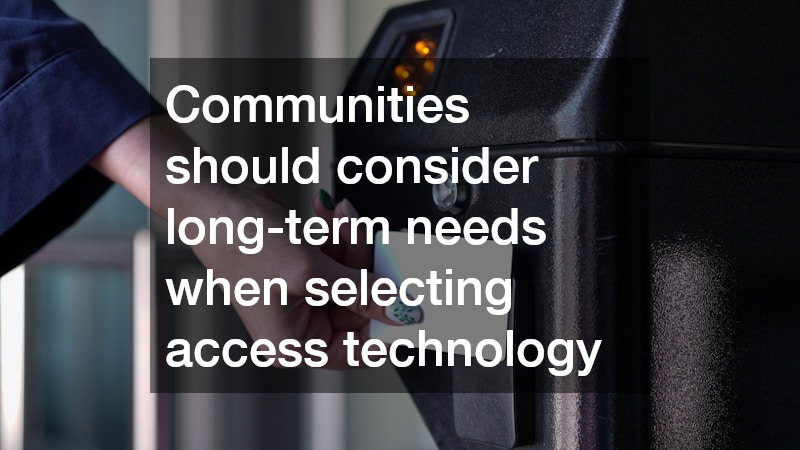
Communities should consider long-term needs when selecting access technology. A system that works for a small neighborhood may not provide the flexibility needed as the community expands.
Before choosing a platform, association leaders should consider factors such as the number of residents, types of access credentials, visitor management options, integration capabilities, administrative tools, and ease of use.
It can also be helpful to consider how the system will be maintained and supported over time. Technology should not simply solve an immediate problem; ideally, it should provide a foundation that can adapt as the community’s needs change.
Community growth brings opportunities as well as new responsibilities. As neighborhoods become larger, associations and property managers need systems that can keep pace with increasing numbers of residents, visitors, vehicles, and shared amenities.
Gated community access control software can help support that growth by making entry more convenient, organizing visitor management, reducing administrative work, and providing scalable tools for managing access. These benefits can contribute to a smoother experience for both residents and community leaders.
However, technology works best when it is paired with thoughtful policies and clear communication. Residents should understand how access procedures work, while association leaders should regularly evaluate whether their systems continue to meet the community’s needs.
By investing in practical technology and focusing on the resident experience, growing communities can create an environment that is organized, convenient, and appealing to current and future residents. A well-managed access system is only one part of community development, but it can play a valuable role in building a neighborhood prepared for long-term growth.