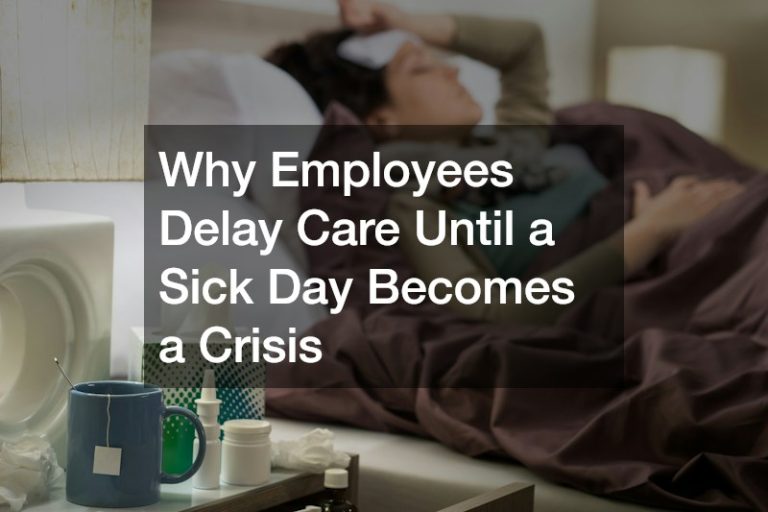
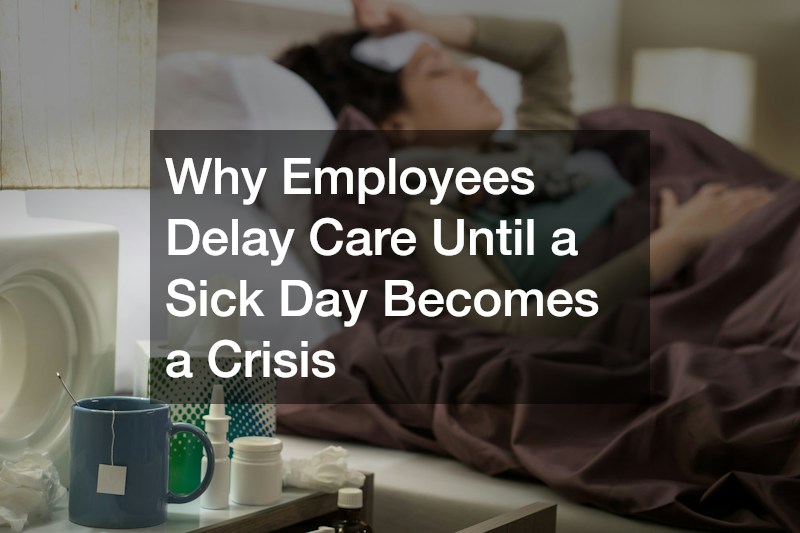
Most people know the warning signs before they call in sick. A cough that lingers for three weeks, a child’s fever that spikes at night, a stressful pattern of drinking that keeps getting excused as “just unwinding.” Yet instead of addressing these issues early, many employees wait, hoping symptoms resolve on their own or that a busy work schedule will clear up enough to make time for care. By the time they finally seek help, a manageable issue has often become an emergency room visit, a missed week of work, or a much bigger health setback than it needed to be.
The Real Reasons People Put Off Seeing a Doctor
Delaying care rarely comes down to laziness or denial alone. It is usually a mix of practical obstacles and emotional avoidance that builds up over time until a minor symptom becomes something much harder to ignore. Many employees worry that taking time off will make them look unreliable or will pile more work onto their plate when they return. In understaffed teams, this fear is often grounded in reality: a missed day can mean a backlog of emails, rescheduled meetings, and colleagues quietly picking up the slack. Cost is another major factor. High deductibles, copays, and the uncertainty of what a visit will actually cost push people to wait and see if a symptom resolves on its own rather than risk an unexpected bill. Logistics add to the problem. Doctor’s offices often keep the same business hours as the workplace, leaving employees to choose between an appointment and a shift, and many don’t have paid sick leave flexible enough to cover the back-and-forth of tests, follow-ups, or specialist referrals. Finally, there’s the emotional piece: fear of a bad diagnosis, discomfort discussing symptoms, or simply not wanting to be seen as the person who’s always “sick.” These feelings are harder to name than a scheduling conflict, but they’re often just as powerful in keeping someone from picking up the phone.
Cost is another major factor, especially for workers who are unsure what their insurance covers or who have a high deductible plan. A visit that might cost a flat $20 copay under one plan could run $150 or more out of pocket under another, and many employees do not find that out until the bill arrives. That uncertainty alone is enough to make someone decide the symptom probably isn’t worth the risk. Others simply do not know where to go for a minor issue and assume their only options are waiting weeks for a primary care appointment or heading to a crowded emergency room. Few realize that urgent care clinics, telehealth visits, or even a pharmacist consultation could resolve the problem in a fraction of the time and cost. Without clear guidance from their employer or health plan, people default to inaction rather than sorting through unfamiliar options. This confusion is often made worse by benefits materials that are dense, jargon-heavy, or buried in an onboarding packet employees never revisit. When a question comes up months later, most workers have no easy way to get a quick answer, so the symptom gets ignored instead.
- Fear of appearing uncommitted or using up limited paid time off, especially among employees who have only a handful of sick days left
- Uncertainty about insurance coverage and out-of-pocket costs, from deductibles to surprise billing from out-of-network providers
- Lack of knowledge about faster, more affordable care options like telehealth, urgent care, or on-site clinics
- Belief that symptoms will improve without medical attention, often reinforced by past experience of minor issues resolving on their own
- Difficulty finding an appointment that fits a work schedule, particularly for hourly workers without flexible hours
- Concerns about being seen as a burden to coworkers who would have to cover their workload
- Past negative experiences with long wait times or dismissive care that discourage seeking help early
How Minor Symptoms Quietly Turn Into Bigger Problems
A sore throat that gets ignored can become a sinus infection requiring antibiotics and several missed workdays. A strained back that never gets evaluated can turn into a chronic pain condition that affects mobility and productivity for months. The pattern is consistent across almost every condition: early intervention is faster, cheaper, and less disruptive than waiting until symptoms force an emergency response.
Employees often underestimate how quickly a minor issue can escalate, particularly with infections, mental health struggles, or metabolic conditions like diabetes. What starts as mild fatigue or occasional dizziness can, within weeks, become something that requires hospitalization. Recognizing early warning signs and acting on them is one of the simplest ways to protect both health and career stability.
Fast Access to Care for Everyday Illnesses and Injuries

One of the biggest misconceptions employees have is that any medical concern requires a scheduled doctor’s visit or a trip to the emergency room. For common illnesses and minor injuries, a walk in clinic offers a practical middle ground, typically accepting patients without appointments and often staying open evenings and weekends. This makes it far easier for someone with a demanding work schedule to get treated for a sinus infection, minor cut, or sprained ankle without burning through a full day of paid time off.
These clinics are generally staffed to handle a wide range of non-life-threatening conditions quickly, which means employees can often be seen, treated, and back at their desk or home recovering within a couple of hours. Knowing this option exists removes one of the biggest excuses for delaying care: the assumption that getting help will eat up an entire day.
- Treats colds, flu, minor infections, and small injuries
- Usually open extended hours including weekends
- No appointment needed for most visits
- Shorter wait times than most emergency rooms
- Lower cost than an ER visit for non-emergency issues
Getting Ahead of Chronic Conditions Before They Escalate
Chronic conditions like obesity, prediabetes, and high blood pressure are notorious for being pushed aside because symptoms develop slowly and rarely feel urgent. Employees frequently wait until a routine blood test reveals a serious problem before taking action, even though treatment options exist well before that point. For individuals managing weight-related health risks, talking to a doctor early about a GLP 1 prescription can be a proactive step that helps prevent the condition from progressing into something that requires more intensive, disruptive treatment later.
Addressing chronic health concerns earlier also tends to be less time-consuming in the long run. A single consultation and a manageable treatment plan is far less disruptive to a work schedule than the specialist visits, procedures, and recovery time that often follow an untreated condition. Employees who build small check-ins with a doctor into their routine are far less likely to face a sudden health crisis that forces extended time away from work.
Recognizing When a Drinking Habit Needs Professional Support
Substance use is one of the areas employees are most likely to delay addressing, often because of stigma or the fear that seeking help will affect their job. What frequently starts as stress-related drinking after work can quietly develop into a dependency that affects sleep, performance, and relationships long before someone is willing to admit there is a problem. Waiting until a crisis point, such as a health scare or a work incident, makes recovery far harder than addressing it early.
For many employees, outpatient alcohol rehab offers a realistic path to getting help without stepping away from work entirely. These programs are structured to allow people to attend treatment sessions around their job responsibilities, which removes one of the biggest barriers to seeking help in the first place. Recognizing the early signs of a drinking problem and reaching out before it becomes unmanageable protects both health and employment stability.
- Increased reliance on alcohol to manage stress or sleep
- Noticeable changes in work performance or attendance
- Attempts to cut back that do not stick
- Physical symptoms like shakiness or poor concentration
- Family or coworkers expressing concern
Why Parents Delay Care for Their Children and the Risks It Creates

Working parents face a unique version of this problem, often trying to assess whether a child’s illness is serious enough to justify leaving work. Fevers, ear infections, and minor injuries are common reasons parents hesitate, hoping the issue resolves overnight so they do not have to disrupt their workday. Unfortunately, children’s conditions can escalate faster than adults’ because their immune systems and ability to communicate symptoms are still developing.
Facilities that specialize in pediatric urgent care are built specifically for this situation, offering quicker access to a provider trained in treating children without the wait times of a general emergency room. Parents who use these services can usually get a clear diagnosis and treatment plan within a single visit, which means less uncertainty and less time away from work overall. Knowing where the nearest pediatric-focused option is located ahead of time can save valuable minutes when a child’s symptoms suddenly worsen.
- Persistent high fever that does not respond to medication
- Ear pain accompanied by crying or sleep disruption
- Minor fractures, sprains, or deep cuts
- Dehydration from vomiting or diarrhea
- Breathing difficulties that are not severe enough for an ER
Building a Personal Plan to Avoid a Health Emergency
One of the most effective ways employees can stop the cycle of delay is by creating a simple plan before they get sick. This means knowing which care options are nearby, understanding what their insurance covers, and having a general sense of their employer’s policies around sick time and medical appointments. A little preparation removes the guesswork that often leads to procrastination when symptoms first appear.
Employees who treat their health proactively, the same way they would treat a car maintenance schedule, tend to avoid the dramatic sick days that derail entire weeks of work. Setting reminders for annual checkups, keeping a list of nearby care options, and addressing symptoms within the first day or two rather than waiting them out can make an enormous difference in long-term outcomes.
- Identify nearby care options before you need them
- Review your insurance plan’s coverage details annually
- Schedule preventive checkups instead of waiting for symptoms
- Talk to your employer about flexible sick leave policies
- Address new symptoms within 24 to 48 hours
Delaying care rarely saves time in the long run; it simply shifts a smaller problem into a much larger one that costs more in missed work, money, and stress. The good news is that employees have more options than they often realize, from fast walk-in care to specialized treatment for chronic conditions and substance use. Taking symptoms seriously the moment they appear, rather than waiting for a crisis, is one of the simplest ways to protect both health and career stability. The next step is simple: identify your care options today, before you actually need them.