The realization usually hits at the absolute worst possible moment. It is the middle of a blistering July heatwave, or perhaps the dead of a freezing January night, and you suddenly notice that the ambient temperature in your home is slowly creeping in the wrong direction. You place your hand over the nearest vent, only to feel a weak puff of room-temperature air—or worse, absolutely nothing at all. The frustration and panic that immediately follow are completely valid. Losing your climate control during extreme weather is not just an inconvenience; it can rapidly become a matter of health, safety, and property preservation.
In an era where video tutorials are available for almost every household task, the modern homeowner’s first instinct is often to grab a toolbox, head to the basement or the backyard, and try to diagnose the problem themselves. The desire to save money and resolve the issue quickly is understandable. However, it is absolutely critical to ground yourself in the reality of what you are dealing with. Modern climate control systems are not simple appliances. They are highly complex, intricate networks that combine high-voltage electricity, pressurized chemical refrigerants, combustible gases, and sensitive microelectronics.
The purpose of this comprehensive guide is to empower you with the knowledge to make safe, financially sound decisions about your home’s comfort systems. We will break down exactly how to differentiate between a simple, everyday maintenance task—like changing a dirty filter or swapping out thermostat batteries—and a genuine, potentially dangerous emergency that requires immediate professional intervention. By understanding the mechanical signs of failure, you can protect your property, safeguard your family, and know exactly when it is time to step back and let the experts take over.
Identifying Electrical Hazards and Tripped Breakers
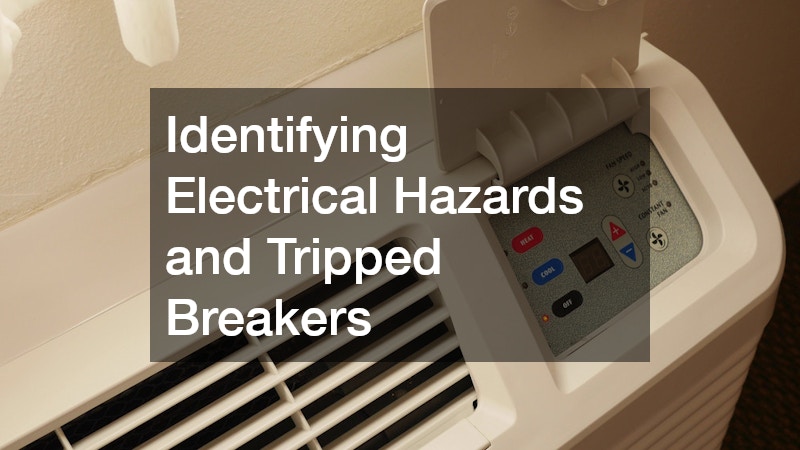
When a climate system abruptly shuts down and refuses to turn back on, the electrical panel is usually the first place a homeowner looks. Finding a tripped breaker and flipping it back into the “on” position is a common troubleshooting step, but it is one that must be approached with extreme caution and a clear understanding of electrical safety limits.
The golden rule of circuit breakers is what industry experts call the “One-Time Reset” rule. Circuit breakers are designed to be the ultimate safety net for your home’s electrical infrastructure. If a breaker trips, it means the system drew more electrical current than the wires could safely handle, and the breaker sacrificed continuity to prevent the wires from overheating and catching fire. If you reset the breaker once and the system resumes normal operation without further issues, it may have been a temporary power surge or a momentary fluke in the grid. However, if the breaker trips a second time, immediately or shortly after resetting it, you have crossed the line from a quirk into a serious electrical emergency. A breaker that repeatedly trips is often signaling a dead short in the wiring, a failing capacitor, or a compressor that has become electrically grounded. Under no circumstances should you continue to force the breaker back on, as doing so removes the safety net and dramatically increases the risk of an electrical fire.
At this stage, you must leave the breaker in the “off” position and arrange for an HVAC emergency repair. Attempting to bypass the breaker, replace fuses with higher-rated ones, or open the service panel on the outdoor condenser to inspect the wiring yourself can expose you to lethal voltages. The capacitors inside these units can hold a fatal electrical charge long after the power has been disconnected from the main panel.
Furthermore, you must rely on your senses to detect electrical failures before they become catastrophic. One of the most alarming warning signs is the presence of a distinct burning odor.
-
The “Fishy” Smell: If you detect a strange, fishy, or urine-like odor near your vents or the indoor unit, this is often the smell of melting wire insulation or overheating plastic components.
-
The Ozone Smell: A sharp, metallic smell akin to a lightning storm can indicate electrical arcing within the system’s contactors.
-
The Burning Dust Smell: While a brief smell of burning dust is normal when turning on a furnace for the first time in autumn, it should dissipate within twenty minutes. If it persists, it could be a sign of an overheating blower motor.
When these smells are present alongside power failures, DIY troubleshooting must end. Complex electrical HVAC repairs require specialized diagnostic tools, such as multimeters and megohmmeters, to safely trace the short circuit. Professionals are trained to navigate these high-voltage environments without voiding your equipment’s warranty or putting your home at risk of a devastating fire.
Decoding Unusual Odors and Loud Noises

Your home’s climate system is designed to operate quietly in the background, providing comfort without drawing attention to itself. When it starts demanding your attention through strange odors or alarming sounds, it is actively communicating that a mechanical or chemical failure is underway. Learning to decode these sensory warnings is a crucial skill for any homeowner.
Let us first address the spectrum of odors that might emanate from your ductwork. As mentioned previously, a brief dusty smell at the start of the winter season is standard, as settled dust burns off the heat exchanger. However, other smells represent immediate, life-threatening emergencies. The most critical of these is the smell of rotten eggs or sulfur. Natural gas is naturally odorless, but utility companies add a chemical called mercaptan to give it this distinct, nauseating smell precisely so leaks can be detected. If you smell rotten eggs near your furnace, you must assume there is a natural gas leak. Do not turn on any lights, do not use your cell phone near the unit, and do not attempt to find the leak yourself. Evacuate the house immediately and call your gas utility provider from a safe distance. Another dangerous odor is the smell of exhaust fumes or a sweet, aldehyde-like scent, which can indicate a cracked heat exchanger leaking carbon monoxide into your living space.
Auditory warnings are equally important to categorize. The mechanical components of your heating and air setup are under constant stress, and when parts begin to wear out, they rarely do so silently.
-
Screeching or Squealing: This high-pitched noise almost always points to a failing fan motor belt or bearing that has lost its lubrication. While not an immediate safety hazard, ignoring it will eventually cause the blower to seize entirely.
-
Heavy Banging or Clanking: If it sounds like someone is hitting the outdoor condenser with a hammer, there is likely a loose or broken part inside the compressor itself, or the fan blade is striking the protective cage.
-
Hissing or Whistling: A high-pitched hiss could be air escaping from severely compromised ductwork, but it can also be the sound of a high-pressure refrigerant leak.
-
Rattling or Chattering: This is often associated with a failing electrical contactor that is struggling to maintain a strong connection, rapidly switching on and off.
If you hear heavy metal-on-metal grinding, loud banging, or screeching, your most actionable and immediate step is to cut the power to the system entirely at the thermostat. Allowing a system to run while it is actively tearing itself apart mechanically will transform a minor part replacement into a catastrophic system failure. Once the system is safely powered down, you should schedule comprehensive HVAC services. A certified technician will have the expertise to disassemble the housing safely, inspect the bearings, belts, and motor mounts, and run full diagnostics on failing mechanical components before they destroy the entire unit.
Troubleshooting Weak Airflow and Inconsistent Temperatures
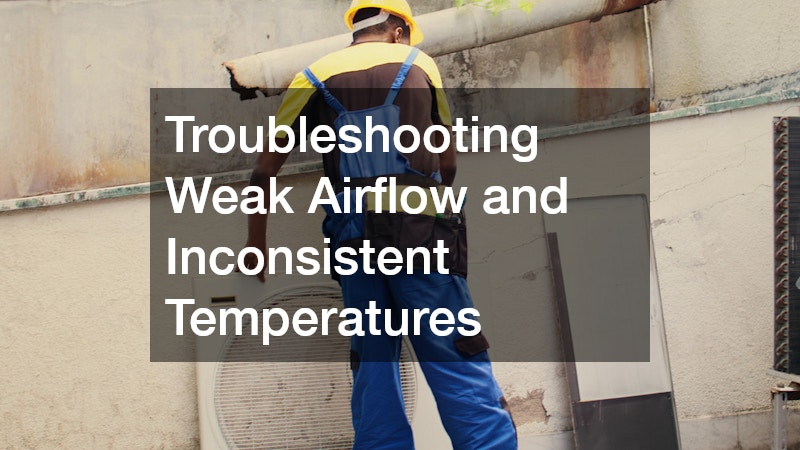
One of the most insidious problems a homeowner can face is a system that appears to be running normally—the fan is spinning, and the thermostat says it is on—but the house simply will not reach the desired temperature. Weak airflow and inconsistent hot or cold spots throughout the house are incredibly frustrating, but they do present a unique opportunity for safe, preliminary DIY troubleshooting before you make a phone call.
Before you assume the worst, it is highly recommended to run through a pre-call checklist to rule out harmless, easily fixable culprits.
-
Check the Air Filter: This is the number one cause of system inefficiency. A filter that is caked in dust, pet hair, and debris acts like a brick wall, suffocating the system and restricting airflow.
-
Inspect the Vents: Walk through your home and ensure that all supply and return registers are fully open and unobstructed. Couches, rugs, or heavy curtains blocking a return vent will starve the system of the air it needs to circulate.
-
Verify the Thermostat: Ensure the thermostat is set to the correct mode (cooling vs. heating) and that the batteries are fresh. A dying battery can cause erratic behavior and misread temperatures.
If you have completed the basic checklist and the airflow remains weak or the air coming from the vents is room temperature, you are likely dealing with a deeper systemic issue. Weak airflow often points to a failing blower motor that can no longer push air with sufficient force, or a complete collapse of flexible ductwork somewhere in the attic or crawlspace. If the air is blowing strongly but is not properly conditioned, you might be dealing with a frozen evaporator coil. When airflow is restricted, or when refrigerant is low, the coil drops below freezing, turning the condensation on it into a solid block of ice that completely blocks the air passage.
To quantify the problem, you can perform a simple diagnostic test using a digital thermometer. Measure the temperature of the air being pulled into the return vent, and then measure the temperature of the air blowing out of the supply vent closest to the unit. The difference between these two numbers is called the temperature differential (or Delta T). In a healthy cooling system, this differential should typically fall between 15 and 20 degrees Fahrenheit. If your differential is only 5 degrees, your system is running constantly but failing to transfer heat.
At this juncture, specialized intervention is required. An established HVAC company possesses the specialized tools, such as manometers and anemometers, required to accurately test static pressure and duct integrity. If you wait too long to resolve airflow blockages or temperature differentials, the compressor will run non-stop, leading to premature failure. Engaging a professional air and heating company ensures that the root cause—whether it is an unbalanced duct layout, a failing metering device, or an iced-over coil—is properly diagnosed and corrected, restoring your home to a comfortable state while preventing long-term strain on the equipment.
Managing Unexpected Puddles and Refrigerant Leaks
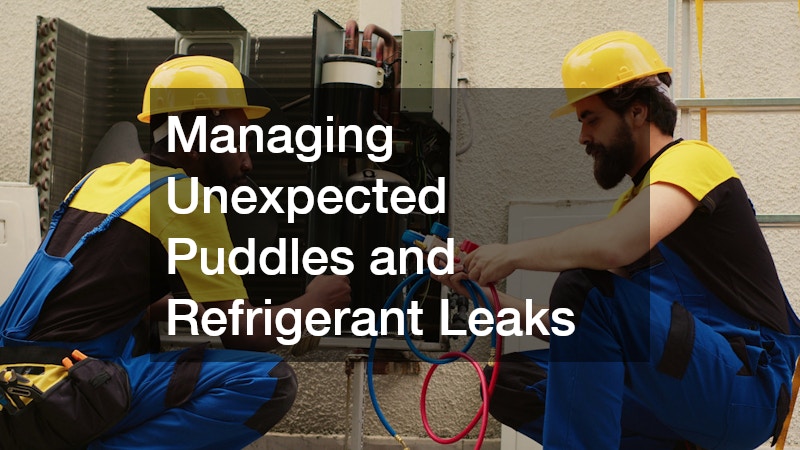
Water and electricity are a notoriously dangerous combination, making the discovery of unexpected puddles around your indoor climate equipment a cause for immediate concern. However, not all leaks are created equal. The key to handling this situation is understanding the difference between a simple water drainage issue and a highly toxic chemical leak.
During the normal cooling process, your system acts as a massive dehumidifier. As warm, moist air blows over the cold evaporator coil, water condenses on the metal fins, drips into a drain pan, and is channeled outside through a PVC pipe known as the condensate drain line.
-
Condensate Clogs: Over time, this dark, damp drain line can become a breeding ground for algae, mold, and mineral buildup. When the line clogs, the drain pan overflows, spilling water into your basement, attic, or utility closet. This is a common issue that causes localized water damage but is generally not a chemical hazard.
-
Frozen Coils Melting: If your system was suffering from weak airflow and the coil froze solid, turning off the system will cause that massive block of ice to melt rapidly, often overwhelming the drain pan and causing a significant puddle.
While a water leak requires prompt cleanup to prevent drywall damage, rotting wood, and the growth of toxic black mold, you must be extremely vigilant to ensure the liquid you are seeing is actually just water.
The danger escalates exponentially if you are dealing with a chemical refrigerant leak. Modern refrigerants are complex chemical compounds designed to transition rapidly between liquid and gas states. If a copper line sets a leak, you might notice:
-
A localized hissing or bubbling sound near the copper lines.
-
A strange, sweet, almost chloroform-like smell in the air.
-
An oily residue surrounding a specific fitting or joint on the copper piping.
Refrigerants are not harmless household chemicals. They can displace oxygen in enclosed spaces, leading to dizziness, asphyxiation, or cardiac arrhythmias if inhaled in high concentrations. Furthermore, liquid refrigerant is so cold that if it contacts your bare skin, it can cause instant, severe frostbite.
If you suspect a chemical leak, your actionable tip is simple: do not touch the equipment, do not attempt to tape or seal the leaking pipe, and ventilate the area if possible. Only EPA-certified HVAC contractors are legally permitted to handle, recover, pressure test, and recharge these pressurized refrigerants due to strict environmental and safety regulations. When you are standing in a puddle of unknown origin, take the time to carefully vet local HVAC companies before letting anyone into your home. Ensure they carry active licenses, comprehensive liability insurance, and the specific EPA Section 608 certifications required for safe and legal chemical handling and disposal.
Evaluating the Tipping Point Between Fixing and Upgrading
There comes a point in the lifecycle of every major household appliance where the cost of keeping it running begins to outweigh the benefits of simply replacing it. Making this decision regarding your climate control infrastructure is often one of the most stressful and expensive choices a homeowner has to make. However, you do not have to rely on guesswork or high-pressure sales tactics; there are objective, mathematical ways to determine the tipping point between a worthwhile repair and a necessary upgrade.
Industry professionals often rely on a calculation known as the “$5,000 Rule” (sometimes adapted depending on inflation and specific regional costs). The formula is straightforward: multiply the age of your equipment in years by the estimated cost of the current repair. If the resulting number exceeds $5,000, it is usually a better financial decision to replace the unit entirely. For example, if you have a 12-year-old system and the technician hands you a repair quote for $500 (12 x 500 = 6,000), the math strongly suggests that investing in a new system is the wiser path. Conversely, a $400 repair on a 4-year-old system (4 x 400 = 1,600) is well worth fixing.
Beyond the math of a single repair, you must also consider the frequency of breakdowns and the “sunk cost fallacy.” This psychological trap occurs when a homeowner has already poured a thousand dollars into patching up a failing system over the last two years and feels compelled to keep fixing it so that money wasn’t “wasted.” If you find your system is breaking down every single season, you are essentially paying for a new system in installments, but without the benefit of a new warranty, improved comfort, or modern energy efficiency.
An excellent actionable tip for evaluating your system’s overall health is to audit your utility bills year-over-year. Pull out your electricity or gas bills from July or January of the current year and compare them to the same months from three or four years ago. Assuming your utility company has not drastically raised their rate per kilowatt-hour or therm, a steady, unexplained spike in your energy usage is a massive red flag. It indicates that the internal components are wearing out, losing their efficiency, and forcing the system to run longer and draw more power just to achieve the same baseline level of comfort.
When you reach the point where you must stop paying for band-aid fixes and start actively budgeting for full air conditioner replacements, the selection of your contractor becomes paramount. The installation process is arguably more important than the brand of equipment you purchase. You must ask highly specific questions when interviewing an AC installation company. Ask them to explain how they determine the correct size for your new unit. If they simply look at the old unit and say they will replace it with the same size, or if they just use a generic square-footage rule of thumb, look elsewhere. You want a professional who will perform a comprehensive Manual J load calculation, which takes into account your home’s square footage, ceiling height, insulation quality, window placement, and local climate data to guarantee your new investment will operate at peak efficiency for decades to come.
Conclusion
Navigating a climate control crisis in your home is undoubtedly stressful, but the difference between a temporary inconvenience and a costly catastrophe usually comes down to knowing your own limits. Being a diligent and responsible homeowner does not mean you have to possess the skills to fix every mechanical failure yourself. In fact, true responsibility lies in recognizing the complexity of the machinery you rely on and knowing exactly when to step back and call the experts.
Throughout this guide, we have explored the critical warning signs that distinguish simple maintenance from genuine emergencies. We have seen how repeated tripped breakers, burning electrical odors, and heavy grinding noises demand immediate power shutdowns rather than DIY investigations. We have explored the nuances of airflow diagnostics and the severe dangers associated with toxic chemical leaks and invisible gas hazards. The overarching theme is clear: prioritizing safety must always supersede the desire to save a few dollars on a service call. No amount of money saved on a weekend DIY project is worth the risk of an electrical fire, a carbon monoxide leak, or the complete destruction of an expensive compressor.
Your home is your sanctuary, and the systems that keep it comfortable are vital to your daily well-being. Do not wait for a blizzard to hit or a heatwave to peak before figuring out who to call. Establish a relationship with a trusted, certified professional well before an emergency strikes. By remaining vigilant, performing basic safe maintenance, and listening to what your home is telling you, you can ensure that your environment remains safe, comfortable, and efficient for years to come.